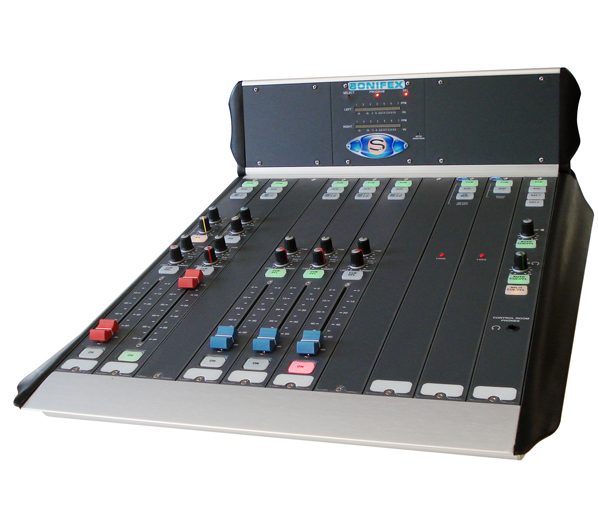
Mixing Consoles
![]() |
||||
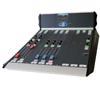
Front View |
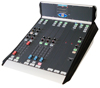
Top View |
|
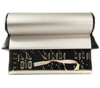
Rear View |
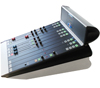
Side View |
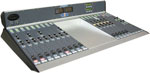
S2 - Digital I/O Analogue Radio Broadcast Mixer with 10 channels

Related Links:
S2 Handbook >
S2 Catalogue >
S2 Mixer Order Form >
Specimen of S2 Mixer Order Form >
FAQs >
What The Press Said:
Resolution, November-December 2008 >
Resolution, September 2009 >
On Air, Winter 2010 >
Radio World, April 2010 >
Radioworld, May 2010 >
Radio, July 2010 >
On Air, July/August 2010 >
Radio Magazine, February/March 2013 >
S2 - Digital I/O Analogue Radio Broadcast Mixer
S2 is a modular broadcast mixer which offers digital audio quality
with analogue reliability in a modular format. S2 has both digital and analogue input channels, together with simultaneous analogue and digital outputs.
Following on from the Sovereign range of audio mixers, S2 combines all the features needed of a radio broadcast mixer in a stylish, flush-mounting chassis : a wide range of input and output channels, PFL/cue, fader-start operation of equipment, automatic monitor muting on mic-live, light controlling remote outputs, optional EQ on input modules, gram amp input options and 2 main audio buses, allowing you to broadcast on the PRG bus while recording on the AUD bus, with bus output selection on each module.
Innovative Design
- The S2 chassis is available in 5 module width sections, allowing 5, 10, 15, 20, 25 and 30 module width mixers. This means S2 can be used for small newsrooms or large on-air situations.
- Modular “pop-up” input and output channels means that the mixer can be maintained simply and quickly. Hot-swappable input channels can be individually removed and repaired whilst still on-air.
- The angle of the meterbridge can be varied and set for best viewing position.
- Any module can be in any position so that customising the mixer for your own purposes is easy.
- Large back-lit buttons allow you to see the status of the mixer at all times.
- The fitted rear panel hides all cable connections but can be simply unclipped and reclipped for maintenance.
- The modular design of the desk gives you the flexibility to expand it at a later date. You can even add another S2 mixer and link them together with a bus connector cable to allow for split desk configurations.
Back to S2 Contents >
Superb Audio Quality and Unquestionable Reliability
- The S2 uses the latest Crystal semiconductor technology to allow input and output of digital audio signals up to 24 bit, 96kHz sample rate.
- The analogue signal paths use low noise circuitry to provide superb audio performance well capable of satisfying radio listeners worldwide.
- The high reliability and build quality of S2 minimises the chance of failure, avoiding lost air-time. Each module is individually checked twice before being assembled into the finished chassis and the whole unit is tested before shipping.
- ALPS long throw 100mm faders give a smooth, repeatable response and the XLR Neutrik connectors used are an industry standard.
- The use of VCAs controlled by the faders ensures tight stereo tracking and eliminates mechanical and electronic noise.
- S2 has a separate 2U power supply providing regulated, ripple-free power to the mixer. There is also an optional switcher to control 2 power supplies providing redundancy.
- High quality stainless steel is used for the chassis and screws to prevent corrosion in high humidity environments.
- Each channel is metal coated internally to provide exceptional EMC screening.
S2 Input Channels - IntroThere is a wide choice of input channels for the S2 mixer. Each channel has a number of common features : Assigning an Input Channel to an Output Bus - Switches at the top of the channel are used to select the output group routing, to either Program, Audition, or both output busses. Selecting the PGM and/or AUD buttons routes the channel audio to the PGM and/or AUD mix busses. The buttons illuminate green to indicate the routing status. Changing the Input Level - Coarse gain is set using pre-set potentiometers on the channel circuit board which allow unbalanced inputs to be used on mono and stereo line inputs. The front panel TRIM control allows fine gain of ±12dB. Changing the Signal Pan, or Balance - The BAL/PAN control is used on mono channels to pan the mono input signal in the stereo image and on stereo channels to balance the stereo image. CUE/PFL (Pre Fade Listen) - Selecting the CUE/PFL button routes the pre-fader input signal to the monitoring system where the signal can be heard via headphones and/or loudspeakers. The button lights green when CUE/PFL is active and a jumper option is available to cancel the CUE/PFL selection when the fader is raised. This button works with both a momentary and latched operation - if held down, the selection is cancelled on release, otherwise the button is alternate action. Fader Start & ON Button Control - The ON button works in conjunction with the 100mm long-throw carbon fader and is used to control channel remotes (e.g. starting a CD player), routing and timers, etc. When unlit, the channel is off. Flashing red indicates that the channel has been selected to ON but not routed to either PGM or AUD. Steady red indicates that the channel is ON and “armed”, ready for the fader to be raised. Raising the fader changes the illumination to green indicating that the channel is live. Alternatively, with the button unlit the fader may be raised and the channel can be operated simply by selecting ON. The illumination in this case toggles between unlit (channel OFF) and green (channel ON). Programmable Button Settings Scribble Pad - A scribble pad is provided at the bottom of the channel for user labelling of the channel function. |
|||
Input Channels - List |
|||
| S2-CMM | Mic/Mic Channel | ||
| S2-CML | Mic/Line Channel | ||
| S2-CS | Dual Stereo Line Channel | ||
| S2-CSE | Dual Stereo Line Channel with EQ | ||
| S2-CSG | Stereo Line & Gram Channel | ||
| S2-CSGE | Stereo Line & Gram Channel with EQ | ||
| S2-CDS | Digital Dual Stereo Channel |
||
| S2-CDSE | Digital Dual Stereo Line with EQ | ||
| S2-C6SS | 6 Way Stereo Source Select Channel with EQ | ||
| S2-CSMM | Stereo Mix Minus Channel | ||
| S2-CT | Telco Input Channel | ||
| Back to S2 Contents > | |||
Faders And Blank Channels |
|||
| S2-PG | S2 Penny & Giles Conductive Plastic Fader | ![]() |
|
| S2-CB | S2-Blank Channel | ||
S2 Output Channels - IntroThere are six different output channels available, for controlling monitoring in both a Control Room and separate Studio, with the two main output channels also having a master fader option. The master output channels provide balanced analogue audio outputs as well as simultaneous AES/EBU or S/PDIF digital audio outputs for both PRG and AUD busses. The analogue mono output can be selected from PRG or AUD and meter selection is available to show either the PRG bus, AUD bus, or to follow the Control Room Monitor selection. Both Control Room and Studio Monitor channels are available for controlling what’s routed to the presenter’s and guest’s headphones and monitor speakers. 2 external inputs can also be monitored. A minimum of 3 channels need to be fitted into a mixer: channels S2-OMC, S2-ODP (or S2-ODPF) and S2-ODA (or S2-ODAF) must be fitted and S2-OMS is optional. Back to S2 Contents > |
|||
Output Channels - List |
|||
| S2-OMC | Control Room Monitor Channel | ||
| S2-OMS | Studio Monitor Channel | ||
| S2-ODP | Digital PGM Output Channel |
||
| S2-ODPF | Digital PGM Output Channel with Master Fader | ||
| S2-ODA | Digital AUD Output Channel |
||
| S2-ODAF | Digital AUD Output Channel with Master Fader | ||
| Back to S2 Contents > | |||
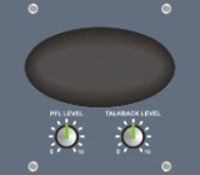
S2 Meterbridge Modules - IntroIn the meterbridge area you can choose from four styles of metering, a phase meter, a dual timer, a PFL/Talkback loudspeaker, 2 talkback modules, a 6 input source selector and a range of blanking plates. S2's meterbridge modules are freely assignable so that you can position them exactly where you want them. S2’s meterbridge modules are freely assignable so that you can position them exactly where you want them. The dual meter panels are used for monitoring console signal levels. Up to three different meter panels can be housed in the meterbridge. The meters can be configured internally to be fed from one of three signal sources, the selected source indicated by a LED:
|
|||
Meterbridge Modules - List |
|||
| S2-ML | S2-Meterbridge Loudspeaker Monitor Panel | ![]() |
|
| S2-MT | S2-Meterbridge Dual Timer Panel | ![]() |
|
| S2-MTBS | S2-MTBS Meterbridge Station Master Talkback Panel |
![]() |
|
| S2-MTB6 | S2-Meterbridge 6 Way Talkback Panel | ![]() |
|
| S2-M6SS | S2-Meterbridge 6 Button Stereo Source Select | ![]() |
|
| S2-MPPM | S2-Meterbridge PPM Meter Panel |
![]() |
|
| S2-MVU | S2-Meterbridge VU Meter Panel | ![]() |
|
| S2-ML53 | S2-Meterbridge LED Meter Panel | ![]() |
|
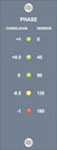
| S2-MPH | S2-Meterbridge Phase Meter Panel | ![]() |
|
| S2-MSB1 | S2-Meterbridge Switch Panel with 1 Button | ![]() |
|
| S2-MSB3 | S2-Meterbridge Switch Panel with 3 Buttons | ![]() |
|
| S2-MB1 to S2MB5 | S2 Meterbridge Blanking Plate (1 Channel Width to 5 Channel Width) |
![]() |
|
| S2 Rubber Keyswitch Buttons | ![]() |
||
| Back to S2 Contents > | |||
S2 Chassis DesignThe S2 chassis is available in 5 channel width sections, allowing 5, 10, 15, 20, 25 and 30 channel width mixers. This means S2 can be used for small newsrooms or large on-air situations. |
|||
| S2-05 | S2-Chassis with 5 channel width sections | ![]() |
|
| S2-10 | S2-Chassis with 10 channel width sections | ![]() |
|
| S2-15 | S2-Chassis with 15 channel width sections | ![]() |
|
| S2-20 | S2-Chassis with 20 channel width sections | ![]() |
|
| S2-25 | S2-Chassis with 25 channel width sections | ![]() |
|
| S2-30 | S2-Chassis with 30 channel width sections | ![]() |
|
| Back to S2 Contents > | |||
S2 Power Supply |
|||
| S2-PSU | S2-Power Supply | ||
| S2-PSUS | S2-Dual Power Supply Switcher | ||
S2 Script Space |
|||
| S2-7SS | S2-7 Script Space (7 Channels Wide) | ![]() |
|
| S2-10SS | S2-10 Script Space (10 Channels Wide) | ![]() |
|
| Back to S2 Contents > | |||
S2 Cable |
|||
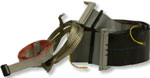
| S2-BI | S2-Bus Interlink Cable | ![]() |
|
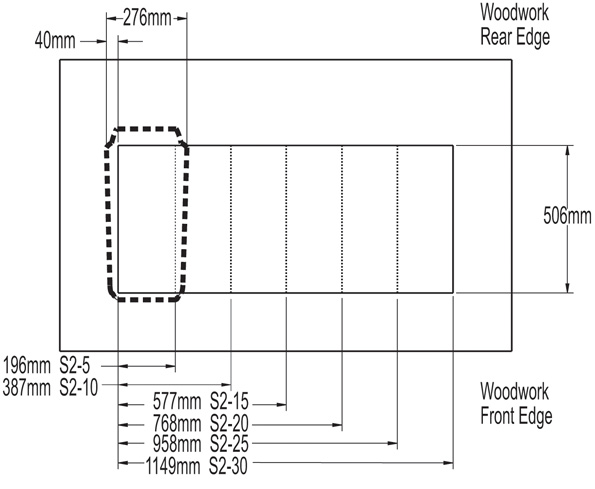
S2 Mixer Placement In Furniture - Weights And Boxed Dimensions |
||||||||||
| Mixer Type |
Width (cm) |
Width (inches) | Depth (cm) |
Depth (inches) | Height (cm) | Height (inches) | Gross Weight (kg) | Gross Weight (lbs) | Nett Weight (kg) | Nett Weight (lbs) |
| S2-30 | 137cm | 53.9” | 70cm | 27.6” | 45cm | 17.7” | 36kg | 79lbs | 34kg | 75lbs |
| S2-25 | 100cm | 39.4” | 70cm | 27.6” | 45cm | 17.7” | 33kg | 73lbs | 31kg | 68lbs |
| S2-20 | 100cm | 39.4” | 70cm | 27.6” | 45cm | 17.7” | 30kg | 66lbs | 28kg | 62lbs |
| S2-15 | 100cm | 39.4” | 70cm | 27.6” | 45cm | 17.7” | 27kg | 59lbs | 25.5kg | 56lbs |
| S2-10 | 60cm | 23.6” | 70cm | 27.6” | 45cm | 17.7” | 24kg | 53lbs | 22.5kg | 50lbs |
| S2-05 | 60cm | 23.6” | 70cm | 27.6” | 45cm | 17.7” | 21kg | 46lbs | 19.5kg | 43lbs |
| Notes: Weights are approximate and based on a mixer chassis loaded with channels. | ||||||||||

| Back to S2 Contents > | ||||||||||

![]() |
|
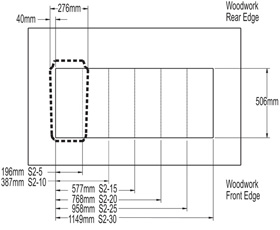
Top View - click on image below to see large view. |
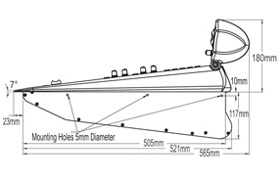
Side View - click on image below to see large view. |
![]() |
![]() |
Back to S2 Contents >
Technical Specification For S2 |
|
Input/Output Impedances |
|
| Mic Input: | > 1k5Ω electronically balanced |
| Mono Line Input: | > 20kΩ electronically balanced |
| Stereo Line Input: | > 20kΩ electronically balanced |
| PGM & AUD Output: | < 75Ω electronically balanced |
| Mono Output: | < 75Ω electronically balanced |
| Monitor Outputs: | < 75Ω unbalanced |
| AES Input/Output: | 110Ω |
| S/PDIF Input/Output: | 75Ω |
| BNC Wordclock input: | 50Ω |
Input/Output Gain Range |
|
| Mic Input: | Preset pot +13dB to +66dB ref -50dBu, TRIM pot ±12dB |
| Mono Line Input: | Preset pot -6dB to +10dB ref 0dBu, TRIM pot ±12dB |
| Stereo Line Input: | Preset pot -6dB to +10dB ref 0dBu, TRIM pot ±12dB |
| Telco Input: | Preset pot -6dB to +10dB ref 0dBu, TRIM pot ±12dB |
| Telco Output: | Preset pot -6dB to +4dB ref 0dBu |
| Mix Minus Input: | Preset pot -6dB to +10dB ref 0dBu, TRIM pot ±12dB |
| Mix Minus Output: | Preset pot -3dB to +3dB ref 0dBu |
| Digital Input: | 0dBFS = +12dBu on input; TRIM pot ±12dB allowing 0dBu to +24dBu |
| Digital Output: | 0dBFS = +18dBu |
Frequency Response |
|
| Mic Input: | 40Hz to 20kHz, -1dB,+0dB (-3dB at 130Hz with HPF in) |
| Line Inputs: | 20Hz to 20kHz, - 0.5dB,+0dB |
| RIAA Input: | 30Hz to 16kHz ±1.5dB RIAA equalised |
Noise (20Hz to 20kHz) |
|
| Mic Input E.I.N.: | -129dB with 150Ω source |
| Stereo Inputs (fader down, no routing): | -89dB ref 0dB |
| Stereo Inputs (fader down, one channel routed): | -89dB |
| Stereo Inputs (unity gain, no routing): | -89dB |
| Stereo Inputs (unity gain, one channel routed): | -86dB |
| Stereo Inputs (unity gain, two channels routed): | -83dB |
| Distortion | |
| Total Harmonic Distortion: | 0.015% at 1kHz, 0dB 0.025% at 10kHz, 0dB |
Crosstalk |
|
| Inter-channel: | < -90dBu |
| Stereo: | -90dBu at 1kHz |
Equalisation |
|
| LF Shelving at 100Hz: | ±7dB |
| HF Shelving at 6.5kHz: | ±7dB |
Range |
|
| Pan Range: | off/-3dB centre/off |
| Balance Range: | ±6dB |
Common Mode Rejection Ratio |
|
| Mic Input: | > 100dB at 70dB gain |
Digital I/O |
|
| Sync Input Sample Rate: | 30kHz - 100kHz |
| Output Sample Rates (Using Onboard Clock): |
32kHz, 44.1kHz, 48kHz, & 96kHz |
| Output Sample Width: | 16, 20, 24 bit (24 bit on V2 ODA/ODP) |
Output |
|
| Headphone Output Load: | >45Ω, 400Ω recommended |
| Maximum Output (Analogue): | +26dBu balanced into 2kΩ or greater |
Power |
|
| Power (S2-PSU): | Filtered IEC, switchable 115V, 230V, fused, 210W max. |
| Dimensions (S2-PSU): (Raw): |
48cm (W) x 24.3cm (D) x 8.8cm (H) 19” (W) x 10” (D) x 3.5” (H) |
| Dimensions (S2-PSU): (Boxed): |
51cm (W) x 41.5cm (D) x 17cm (H) 20” (W) x 16.3” (D) x 6.7” (H) |
| Weight (S2-PSU): | Nett: 6kg Gross: 7.8kg Nett: 13.2lbs Gross: 17lbs |
| Dimensions (S2-PSUS): (Raw): |
48cm (W) x 23cm (D) x 4.4cm (H) 19” (W) x 9” (D) x 1.7” (H) |
| Dimensions (S2-PSUS): (Boxed): |
55cm (W) x 39.3cm (D) x 8.5cm (H) 21.6” (W) x 15.5” (D) x 3.4” (H) |
| Weight (S2-PSUS): | Nett: 1.58kg Gross: 2kg Nett: 3.5lbs Gross: 4.4lbs |
| Back to S2 Contents > | |